
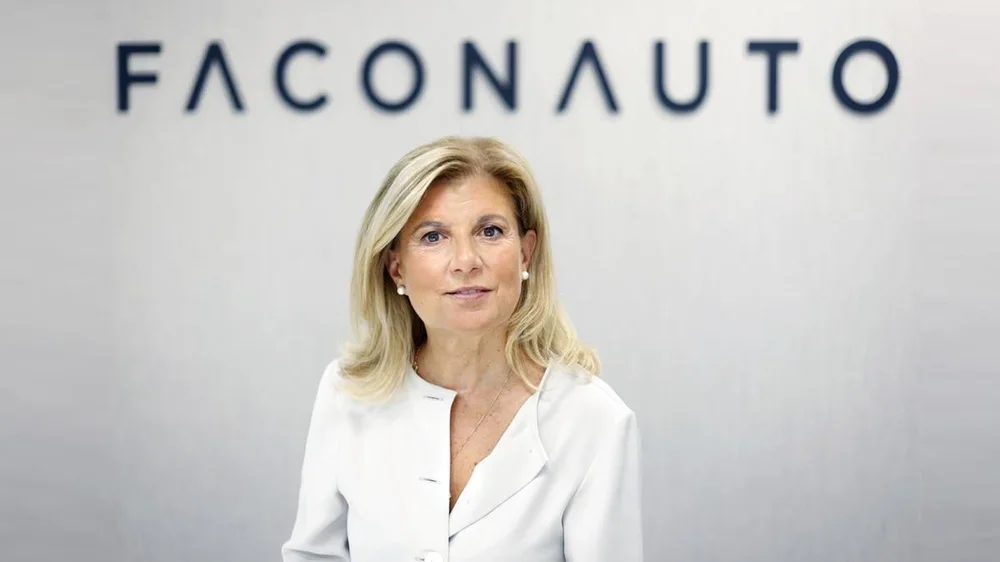
Marta Blázquez, president of Faconauto, the Spanish car dealership association, remains convinced that collaboration is essential across all stakeholders—government, manufacturers, suppliers, and distributors—to drive a strategic sector where the final customer acts as the ultimate judge. The Iran conflict, the Plan Auto+ initiative, shifting geopolitics, the now-familiar entry of Chinese brands, and the real pace of electrification shape the roadmap for a future heavily dependent on present decisions. We spoke with Marta Blázquez about the path traveled so far and the road ahead from Faconauto’s privileged perspective.
**Q: Do you think dealership management is changing with the arrival of Chinese brands?**
The dealerships currently operating in the market have traditionally worked with European, Japanese, and sometimes Korean brands. But yes, Chinese manufacturers bring a different management style. Their ways of working and operational rhythms are distinct.
**Q: How different?**
The entry of Chinese brands is significantly accelerating a structural transformation in Spain’s distribution sector. This shift was already underway due to digital and energy-related changes, but Chinese brands are speeding it up because they’ve recognized that the most trusted and effective channel to reach customers is the dealership network.
**Q: How are they achieving this?**
They initially started with smaller networks, but now all of them are expanding their customer touchpoints, naturally seeking out our entrepreneurs. Our dealers see a commercial offering of high-quality, technologically advanced products and are eager to participate. Since most Chinese brands have European executives who understand this ecosystem well, they’re adopting commercial policies that appeal to dealerships. This is expanding the size of our dealer groups and diversifying their portfolios.
**Q: Do they truly operate differently?**
Yes. They entered the market with a clear understanding of traditional pain points in distribution and are eliminating them, using this as a strategy to attract our dealers. They know their weakness lies in aftersales service, so they focus heavily on ensuring reliable post-sale support—a critical factor for dealerships serving their own customers. They know how to devise compelling strategies to offer to dealer groups, which broadens the market, strengthens dealer groups, and boosts their profitability. That’s the good news.
**Q: Do you see this as positive?**
From a commercial perspective, it’s very good news, reflected in the market share Chinese brands are gaining. Competition is welcome because it improves customer offerings. However, we continue to advocate for regulatory symmetry—ensuring that Chinese brands, not just in distribution but across the entire sector, especially manufacturing, operate under the same conditions as local players. That’s a challenge that needs to be addressed.
**Q: Is the industry ready for this way of working?**
Each brand is a different world, and every situation is unique. Moreover, in recent years, the environment has become so volatile that if there’s any retail entrepreneur in Spain capable of riding the waves and adapting, it’s our dealers.